The Healing Power of Nature in Art
Art has always been shaped by the world around us. By what we notice, what we feel, and what quietly moves us.
For me, nature is an endless source of that quiet movement. The curve of a leaf, the texture of fruit skin, the way light settles across a surface, these small details hold more than aesthetic interest. They hold rhythm, memory, and a kind of steady calm.
The relationship between nature and art isn’t just about subject matter. It’s about slowing down long enough to observe. To really see. And in that act of noticing, something begins to soften.
When we translate organic forms into line, colour, and texture, we’re not only creating an image, we’re engaging in a process that grounds us. And when that image finds its way into a space; a kitchen wall, a dining room, a quiet corner, that pause has the potential to extend beyond the artist. The observer is invited into it too.
In this post, I want to explore how nature shapes my creative practice, and how art, in turn, can become a gentle tool for healing and wellbeing, not only in the making, but in the living with.
Some of my earliest food studies began with garlic. A humble bulb, often broken apart and scattered across a chopping board. But when you pause with it, when you really look, there’s an unexpected elegance. The papery skin catches light in soft oranges, violets and creams. The cloves curve like small sculptural forms. Drawing garlic required patience, subtle tonal shifts, and careful layering. It was less about drama and more about reverence.
And perhaps that reverence is felt by the viewer too a reminder that even the most ordinary objects carry quiet beauty when given attention.

The pineapple works came from a similar place of observation. What we discard, the skin, became the focus. Its repeating geometry, the gleam of gold against deep green, the tension between sharpness and symmetry.
Translating that surface into marker and pencil then watercolour and acrylic became almost meditative.

Each segment demanded attention. Each highlight required restraint. The act of rendering it felt like honouring something overlooked.
When displayed in a space, that same intricate surface can shift the way we see everyday things — inviting a second glance at what might otherwise be thrown away.

With 'Sunlight through basil', the experience was softer. Translucent leaves filtering light, veins glowing gently against shadow.
This piece wasn’t about contrast or boldness; it was about breath. About the quiet stillness of a kitchen in the morning. The kind of moment that could easily pass unnoticed.
Living with an image like that can subtly influence the rhythm of a room encouraging calm, reflection, and a return to simple sensory awareness.

And then there was stacked cinnamon, warm, layered, aromatic even in memory. Drawing spice is a sensory experience.
The deep browns, the softening edges created with coloured pencil, the almost tangible texture of the rolled bark. Working on that piece felt immersive. I could almost smell it as I built up the tones.
The coloured pencils played an important role there, softening the structure and allowing warmth to settle into the work rather than overpower it.
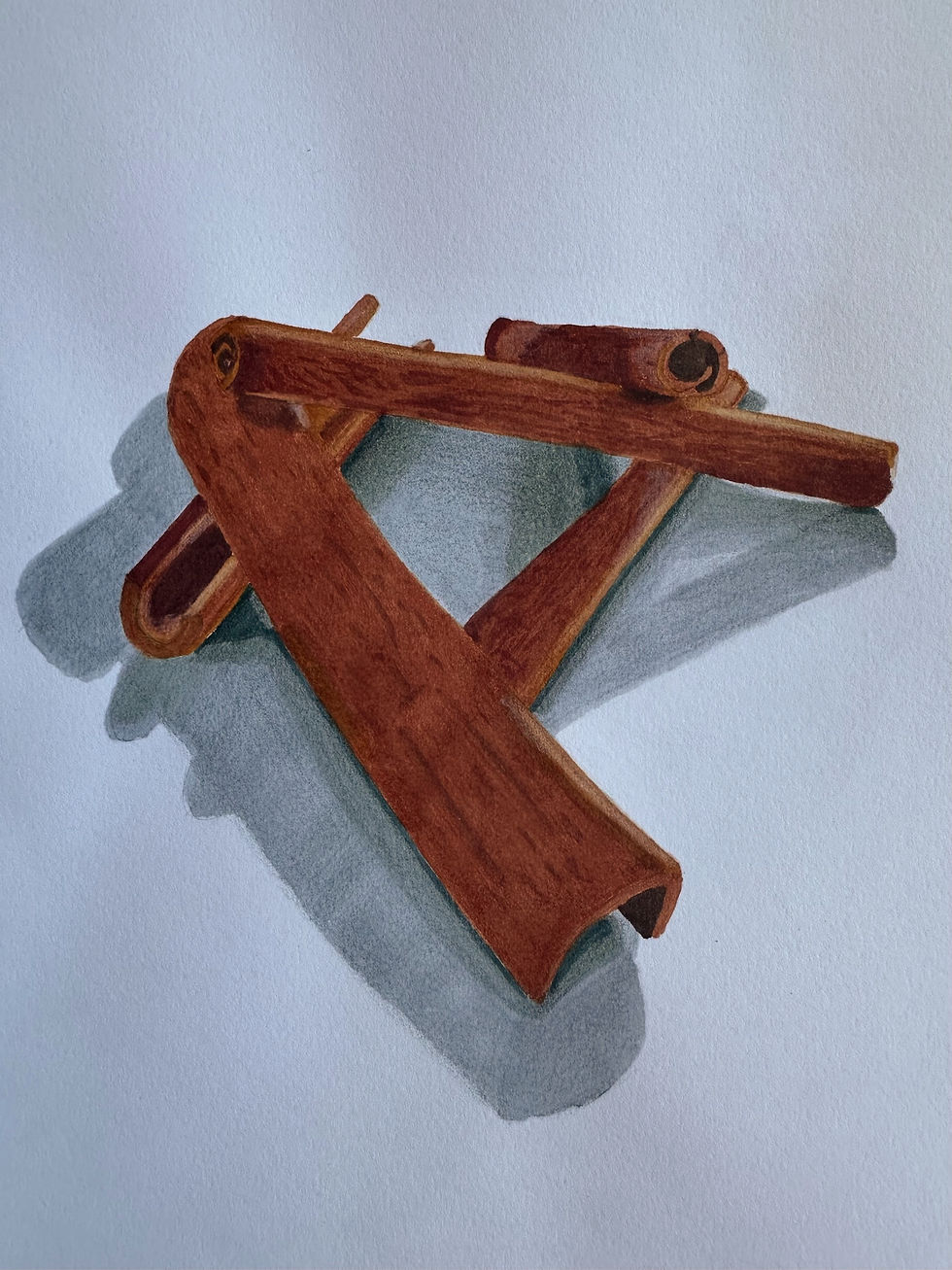
That warmth translates visually. Even without scent, the tones and textures can evoke comfort, something familiar and grounding within a space.
Across all of these studies, the subject shifts - garlic, pineapple, basil, cinnamon - but the intention remains the same: to notice what is already here. To sit with it long enough that its quiet complexity begins to reveal itself.
There is healing in that pause. In choosing to observe rather than rush. In recognising that beauty doesn’t always announce itself loudly, sometimes it exists in the margins, in the fruit bowl, on the windowsill, in the spices we scatter without thinking.
Art, for me, is a way of extending that pause. And when these works move beyond the studio and into homes, cafés, and shared spaces, my hope is that they become gentle reminders to look a little closer, to breathe a little slower, and to find calm in the ordinary.


Comments